The Ultimate Guide to Camping with Kids

  1. Share
0 0

Camping is one of those outdoor adventures that leaves lasting memories and provides stories for years to come. Camping with kids? That’s a whole different animal. While the memories and stories will still be there, the mere thought of bringing kids camping is enough to strike fear into the hearts of parents everywhere. What if they don’t sleep? What if they try to pet a wild animal? What if they get bored and whine us to death? While these are all legitimate concerns (especially that last one), with the right planning, you can make sure your overnight adventure under the stars goes smoothly, and we are here to help. Read on for advice on how to make camping with kids your new favorite outdoor adventure.
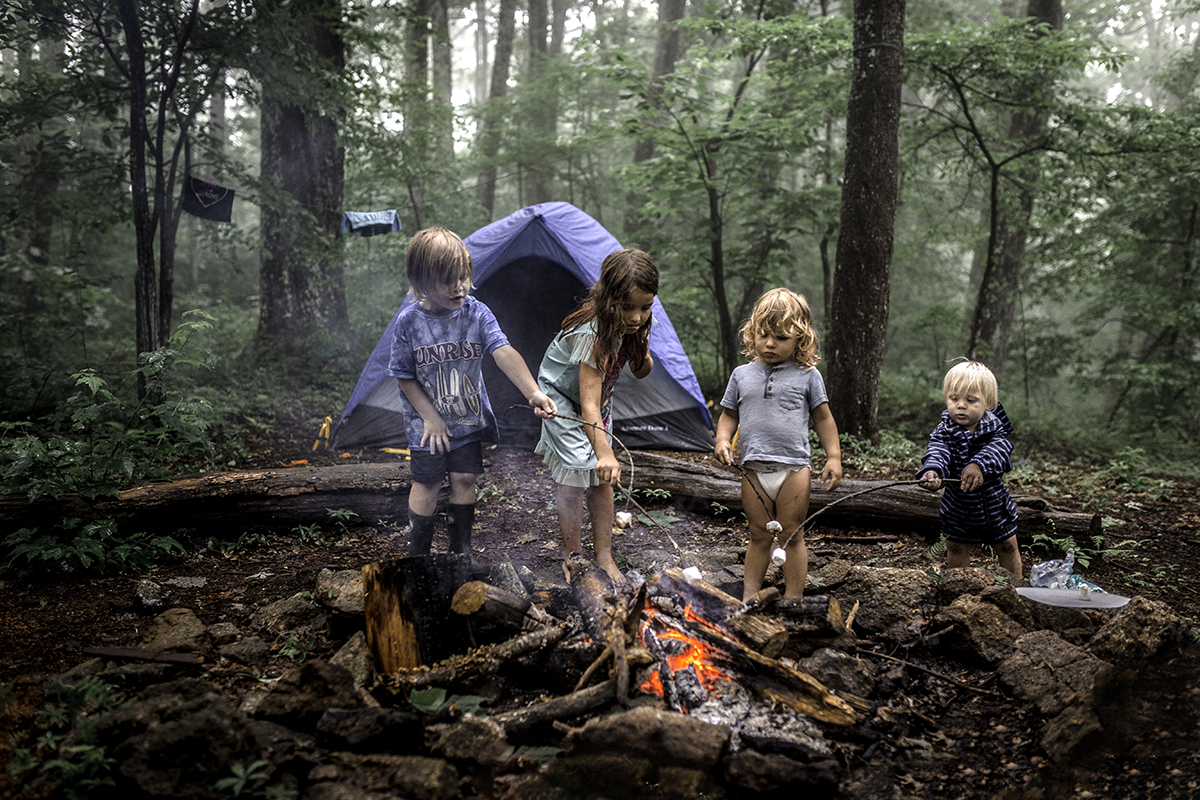
 

kids at a camping site

Picking Your Site

Before you even think about what to bring, you’ll want to think about where you are going. Camping with kids brings extra considerations that may not come into play when camping with only adults. You will want to find a site that is fairly close to a bathroom if your kiddos are potty training or a little shy to do their business in the woods. Also, if the campground has water features (such as a beach or a creek), you may want to choose a site that isn’t right on the water if you are worried your kiddos will run right in. Lastly, the volume can be an issue at some campgrounds, especially those that have sites close together. Seek out a campground with large sites or book two sites next to each other to help prevent the all-night party crowd from keeping your kids up at night.  Here are more tips on what to look for in a kid-friendly camping site. Also, this article gives tips on how to stay safe while camping during the COVID-19 pandemic.

Sleep Soundly 

By far the biggest concern we hear regarding camping with kids is how to get them to sleep in unfamiliar territory. We hear questions like “what if they never fall asleep?”, “What if they get too cold?”, “What if I wake them up?, and “What if they wake up raring to go at 4 am?”. The list of worries may be long, but trust us, the family memories are worth it! Here are a few tips we have picked up along the way to help ease your worries:

  1. Warm comfy sleep is essential. Check the weather report and pack layers if needed. If it’s going to get really chilly you may want an extra blanket under and over your sleeping bags. For the youngest kiddos and babies, rigging up a warm and safe sleeping solution can be tough. A sleeping bag specifically made for little bodies is a great option to help them regulate their body temperature at night. Morrison Outdoors specializes in safe, comfortable sleeping bags for children as young as 6 months. For more information and reviews for these kid-approved sleeping bags, check out this article.
  2. Wear them out! This is generally pretty easy since there is so much to explore. Plan activities that will expend plenty of energy such as hiking, swimming, or riding bikes.
  3. If possible, be flexible with bedtimes. That doesn’t mean throw your routine out the window, buthttps://morrisonoutdoors.com/?aff=1 with little escape from the sunlight, it may be hard to get kiddos to sleep at their normal time. Letting them stay up an extra hour will feel like a treat for them and mean less struggle for you when it comes time to hit the sleeping bags.
  4. Decide how you want to configure your sleeping arrangements ahead of time, and practice at home if possible. You may find that a 4-person tent just isn’t big enough to accommodate a family of 4 when you factor in sleeping pads/mattresses, the use of a portable crib, and your gear.

Check out this article for more information on how to sleep in a tent with young kids

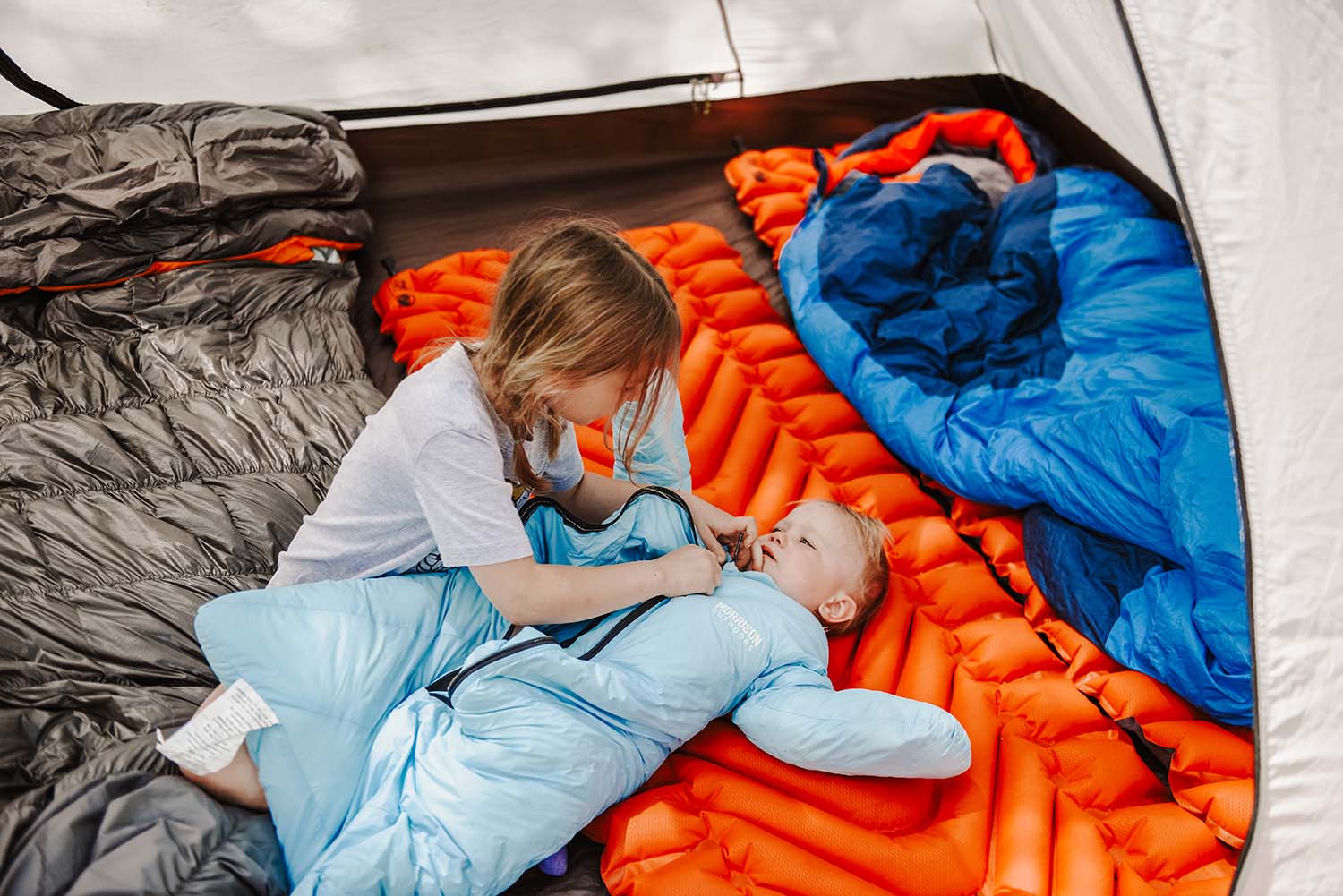
baby and young child in tent wtih sleeping bags

What to Eat

Bring snacks! And more snacks! For dinner, there is nothing wrong with the tried and true “hotdog on a skewer” camping meal, but you may be wondering if other easy options exist (especially ones that include more than just the meat food category). From delicious skillet meals to foil packets, you can prepare at home, this article has tons of tips on easy camping meals for kids. For recipes broken down by meal type (breakfast, lunch, dinner, and dessert), start with these fun and kid-friendly camping recipes.

Seasonal Tips

Every season brings new advantages (and challenges) to camping. For seasonal-specific tips, check out these articles for tips on cold-weather camping and how to layer for winter camping, and this article for planning a summer camping adventure.

More Tips

For more specific information, check out the topics below:

Camping with Kids Gear Checklist

Here is a helpful, downloadable packing checklist for camping with kids:
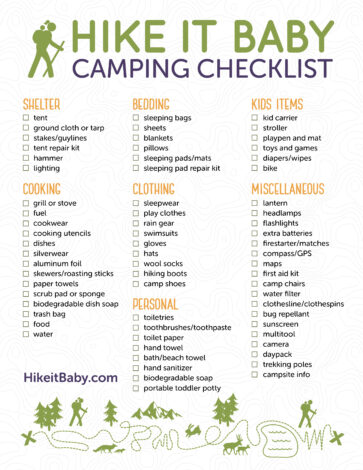
Family Camping Checklist

Download the Checklist Here


ABOUT OUTGROWN

OutGrown is a 501(c)(3) nonprofit that works to create a world where everyone can enjoy the physical and mental benefits of spending time outside. We are focused on creating opportunities and removing barriers to access so families with babies and young children can take their first steps outside. We believe all families have the right to connect with nature, benefit from spending time outdoors and be inspired to a lifelong love of nature. Since its grassroots inception in 2013, OutGrown is a growing community of 280,000 families and over 300 volunteer Branch Ambassadors. More information on all of our programs can be found at WeAreOutGrown.org 


EDITORS NOTE:

We hope you enjoyed reading this article from OutGrown. We’re working hard to provide our community with content and resources that inform, inspire, and entertain you.

But content is not free. It’s built on the hard work and dedication of writers, editors, and volunteers. We make an investment in developing premium content to make it easier for families with young children to connect with nature and each other. We do not ask this lightly, but if you can, please make a contribution and help us extend our reach.


This post is sponsored by Morrison Outdoors, however, we would not recommend something that we and our children do not love. Our opinions are our own. This post contains affiliate links. If you purchase through one of those links you won't pay more but Hike it Baby will get a small commission which helps us further our mission. Thanks! This post was inspired by an article originally written in March of 2018.

Community tags

This content has 0 tags that match your profile.

Let's Talk Gear & Snacks

Family Adventures

Comments

To view comments or leave a comment, login or sign up.

Related Content

0
Layering Basics to Keep the Kids Cozy This Winter
We’ve all heard it before: “It’s too cold to go outside.” However, we believe that getting outside and enjoying nature is important all year round, regardless of the weather. As Alfred Wainwright so eloquently put it, “There’s no such thing as bad weather, only unsuitable clothing.” But how do you dress the kiddos so they will be comfortable when the temperature drops? Check out this handy guide to give you an idea on which layers and materials work best to keep your kids cozy in all temperatures, and dry when those first snowflakes fly. Get ready to make some fun outdoor family memories this winter! THE BASICS Layers can be broken into 3 main categories: BASE LAYER This is the layer closest to the skin. It wicks sweat away from the skin to keep you warm and dry. Best Materials: Merino wool is our favorite, but synthetic materials such as polyester and nylon can work as well. You’ll want to AVOID COTTON! It collects and holds on to moisture which can then chill the skin when it’s cold and lead to a drop in body temperature.   MIDDLE LAYER (ALSO CALLED “SECOND LAYER”) This layer goes right on top of the base layer and it retains body heat to provide an insulating layer of warmth. It is generally thicker and “fluffier” than the base layer Best Materials: Thick knit wool, polyester fleece, down insulated, and synthetic insulated are all great options. OUTER LAYER This shell layer shields you from the elements such as wind, rain, and snow. Best Materials: Depending on the weather, you’ll need water-resistant or waterproof, breathable shells. LAYERING BASED ON TEMPERATURE CHILLY (50-60 DEGREES F) While this temperature range may not seem concerning, it’s important to remember that children (especially babies) are not as efficient at regulating their own body temperature. Start with a base layer such as a bodysuit for babies or long-sleeve shirt for older kiddos made with Merino wool or synthetic materials. Add pants and a sweater, and top it off with a light wind or rain jacket if needed. Be sure to add a thin hat for babies (especially the adorable hairless cuties) and socks with shoes or booties to keep extremities warm. COLD (40 – 49 DEGREES F) As it gets colder, clothing materials become more important to keep kiddos warm and dry. Comfortable kids mean you won’t have to cut outdoor adventures short due to discomfort. Start with a quality bodysuit for babies made from merino wool or long johns for older kiddos. Add a mid-layer such as a fleece sweater/jacket and pants. You can then top it off with a wind or rain jacket medium-warmth hat, a neck warmer, thin mittens, shoes or booties. FRIGID (20-39 DEGREES F) Having fun outdoors in these temperatures is definitely doable with the right layers. Start again with a bodysuit or long johns made from Merino wool or synthetic material. Layer on a thick wool or synthetic sweater and pants. For the outer layer, we recommend a well-insulated jacket or snowsuit. Top it off with a thick hat, warm mittens, a neck warmer and winter boots.   For more tips on layering, check out these articles: Keeping your Family Warm on the Trail in Winter How to Layer When Babywearing in the Cold Winter Gear for Adults   (Photos Courtesy of Michelle Craig) ABOUT OUTGROWN OutGrown is a 501(c)(3) nonprofit that works to create a world where everyone can enjoy the physical and mental benefits of spending time outside. We are focused on creating opportunities and removing barriers to access so families with babies and young children can take their first steps outside. We believe all families have the right to connect with nature, benefit from spending time outdoors and be inspired to a lifelong love of nature. Since its grassroots inception in 2013, OutGrown is a growing community of 280,000 families and over 300 volunteer Branch Ambassadors. More information on all of our programs can be found at WeAreOutGrown.org    EDITORS NOTE: We hope you enjoyed reading this article from OutGrown. We’re working hard to provide our community with content and resources that inform, inspire, and entertain you. But content is not free. It’s built on the hard work and dedication of writers, editors, and volunteers. We make an investment in developing premium content to make it easier for families with young children to connect with nature and each other. We do not ask this lightly, but if you can, please make a contribution and help us extend our reach.  
0
10 Things You Wouldn't Think to Bring On Your Next Camping Adventure But You Should
Are you planning a family camping adventure this season? If so, you have likely seen the extensive gear checklists and suggestions for what to bring with you. We have a pretty awesome one located in our Ultimate Guide to Camping with Kids. However, there are a few items the majority of these lists leave out that we think can make a family camping trip a whole lot better. Versatile, durable slip-on shoes If you have ever woken up in a tent in the middle of the night to the undeniable urge to use the bathroom, you know that the thought of finding and lacing up your hiking shoes in the dark while trying to not wake the whole tent is daunting enough to have you consider holding it. And, anyone with little kids knows that asking a child to hold it isn’t an option (or at least not a wise one). Bring slip-on shoes for the whole family that are easy to pull on, closed-toe so your toe doesn’t meet a rock in the dark and can double as a hiking shoe. Merrell’s classic Jungle Moc collection fits these criteria while also being stylish with options for every member of your family. Pre-prepped meals When camping with kids, you never know how the night will go so bring along some pre-prepped meals and ingredients to save your sanity. Here are a few options to make camp cooking a cinch: Pre-scrambled eggs - Break your eggs into a large Ziploc bag, add your milk and salt/pepper, seal the bag and store it. When ready to cook, simply shake the bag to mix, pour into your camp pan and you’re good to go! Less mess and you won't have to worry about keeping the eggs from breaking in the cooler. Pancakes - Mix together the ingredients for pancakes into a Ziploc bag and store it. When ready to cook, simply cut the corner off the bag and squeeze a little in the pan at a time. Freeze stew or soup - Make your stew/soup ahead of time and freeze in a large Ziploc bag. Throw it into the cooler before you leave and it doubles as an ice pack (this works for meat, like hotdogs too!) By the second night, it will be thawed enough to heat quickly in a pan and enjoy. Foil Packet Meals - These pre-prepped meals are super versatile, and all you have to do pull them out of the cooler and plop them on the grill. Check out this article for more information. Kids Play Tent This could be a pop-up tent you don’t mind getting dirty or an old tent you no longer use. Give your kids their own space to play with toys, relax or read in the shade while you set up camp and keep everyone happy. Rag mat or Astroturf for Outside Your Tent This provides the perfect spot to take off your shoes before entering your tent without tracking excess dirt and debris into the tent. Plus, you’ll always know where to find your shoes! Dustpan/brush Even if you take every precaution possible, you will likely still end up with dirt and debris in your tent. Instead of attempting to shake out your tent or remove the dirt by hand, bring along a small dustpan and brush to make cleanup quick and easy. The brush also comes in handy for cleaning up a picnic table and getting caked in sand and dirt out of towels, blankets or clothes. Water Gear Whether you are camping near a water source or create your own water fun to cool off after a hike, water gear is sure to make your life easier. A quality pair of fast-drying water shoes with good grips, such as Merrell’s Choprock collection, along with fast-drying UPF clothing make water play both fun and safe. Add in some squirt guns or even some sponges for the kids to soak and toss at each other, and you are set for some fun, water-drenched camping memories! Old/Inexpensive Digital Camera Let the kiddos morph into junior nature photographers by supplying an old or low-priced digital camera. You could even send them on a photo scavenger hunt to find and take photos of natural items around your campground. (Check out this list of scavenger hunt ideas here.) This is a wonderful way to explore their surroundings while still Leaving no Trace. Duct Tape The real question is what can’t you do with duct tape? From patching a tent to using it as a bandage, blister blocker or even rope/cord in a pinch, a roll of this been-there-done-that fixer should be in everyone’s camping gear. Hand-Washing Station Between the constant supply of dirt and the threat of a global pandemic, a makeshift hand washing station is definitely a good idea. All you need is a container with a spigot for water (such as an old laundry detergent container), a bucket to put underneath to catch the dirty water, and, of course, soap. Nighttime Adventure Items There’s nothing quite like sleeping under a sky full of stars, especially if you luck out with a spot in an area with low light pollution. Taking along a star chart to identify constellations along with glow sticks for the whole family can enhance the experience. You can also include a book of scary (or silly) camping stories to end the night with some family fun. Do you have a piece of gear or something that you brought along that saved your camping trip or made for a more stress-free vacation? Share your favorite camping hacks in the comments! Hike it Baby works to be the most effective hub of tools, information, and community inspiring all families with babies and young children to get outside and connect with nature. Learn more about Hike it Baby's mission and how you can get involved.   About Hike it Baby Hike it Baby is a 501(c)(3) non-profit organization dedicated to getting families outdoors and on trails across the U.S. and internationally, supporting, educating and inspiring families through their more than 300 communities across North America. Since its grassroots inception in 2013 in Portland, Oregon, Hike it Baby is now a growing community of 270,000 families and 500 volunteer branch ambassadors hosting more than 1,600 hikes per month. More information, as well as daily hike schedules, can be found at HikeitBaby.com, Facebook, YouTube, Pinterest, and Instagram.     Photos courtesy of Michelle Pearl Gee, Michelle Craig, and Krystal Weir. Editors Note:   We hope you enjoyed reading this article from Hike it Baby. We’re working hard to provide our community with content and resources that inform, inspire, and entertain you.   But content is not free. It’s built on the hard work and dedication of writers, editors, and volunteers. We do not make this ask lightly, but if you are able to afford it, make a donation, and become a Hike it Baby member.  A membership also makes a great gift for that new parent in your life. We make an investment in developing premium content to make it easier for families with young children to connect with nature and each other. If you can, please make a contribution and help us extend our reach. This post is sponsored by Merrell, however, we would not recommend something that our children do not love.