
Ways to pack snacks and food on road trips

  1. Share
0 0

For many families, summer is the time for road trips. Regardless of the total miles of pavement, one of the many things to consider is what your family is going to eat while on the road.

With the cost of drive-thrus and gas station stops quickly adding up, it’s important to plan ahead so you’re ready when hunger strikes—and when the kiddos need something to munch on.

I'm sure other families are like ours. Within an hour, my 5-year-old can ask ten times, "I'm hungry. When will we stop to eat?" Knowing his tendency to ask the same question over and over and over... and over again, it's important for us to have quick, accessible snacks in the car, as well as foods we can prepare quickly during a stop.
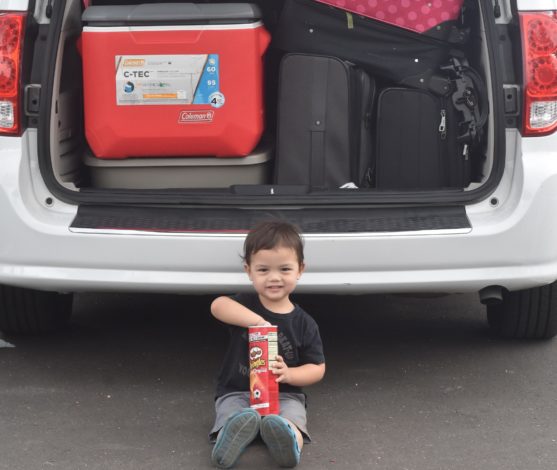
Food and snack hacks by Vong Hamilton for Hike it Baby 

Coolers Instead of Suitcases

Last summer, our family spent a week in Grand Teton National Park and Yellowstone National Park. Meal prep was essential. We stayed in different places every night and didn’t have access to a fridge or cooking appliances.

To complicate things more, we flew into Salt Lake City—a 5-hour drive to Grand Teton—and were limited in how much we could bring with us. We had the added challenge of transporting three car seats, food supplies, luggage, and hiking gear for five people through the SLC airport.

Our solution? We packed everything into two coolers and brought duffle bags that fold into small pouches. Once we got to our destination and bought groceries, we transferred clothes into the duffles. One cooler served as our “fridge” for perishable foods, while the other became our pantry. It held a portable butane cookstove, cooking supplies, and dry goods.

This method worked out better than expected, and I wish I’d done it sooner. It was so convenient to just pull out two containers with everything we needed. The kids ate faster, had fewer meltdowns, and we avoided the scramble of long restaurant waits or overpriced snacks.
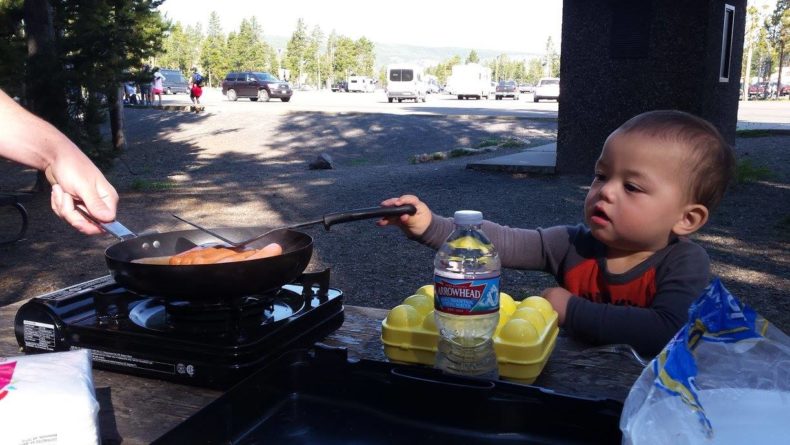
 How to pack snacks and food on road trips by Vong Hamilton for Hike it Baby

Other Families Share Their Road Trip Hacks

Nicole Rosenberg
We carry snacks that don’t need refrigeration in a box. We keep a cooler with drinks and condiments. Then we stop at grocery stores to buy small amounts of deli meat and cheese for sandwiches.

For dinners, we bring a backpacking stove and boil water for freeze-dried food or to warm up canned soup and pasta.

Jordan Else
We love our Kleen Kanteen and RTIC water bottles. Reducing waste is important to us, and reusable bottles help.

For packing food, we use LunchBots containers to make our own “lunchables.”

Our favorite road and plane snacks:

  • Bare fruit

  • Moon Cheese

  • Harvest snap pea crisps

  • Epic bars

  • Fresh fruit

  • Yogurt (freeze if flying)

  • Carrots

  • Fig bars for a treat

Joey Kendrick Johnson
We keep a kitchen box and cooler stocked for breakfast and lunch, then enjoy dinner at a restaurant. I pack wraps, sandwich makings, cut fruit and veggies, jerky, trail mix, and the usual snacks—applesauce packets, fruit leather, raisins, nuts, pretzels, crackers, and lots of water.

Peanut butter and honey are staples too. Sometimes, that’s all my toddler will eat—and that’s not a battle I need to fight during a long road trip.

Kayla Klein
We always travel with a cooler because of insulin storage. We’ve been doing mini weekend adventures, but eating out as a family of six gets expensive fast.

I make dinners ahead of time—like pasta salad, spaghetti, or chicken parm—so they’re easy to reheat or serve cold.

We also pre-pack snacks, fruit, veggies, pretzels, cheese, and yogurt into individual bags for easy access. Because we bring most of our own food and drinks, we’ve been able to take more trips without blowing the budget.


What Are Your Go-To Road Trip Snacks?

Do you have other snack and food hacks for family travel? Share them with us in the comments below—we’d love to learn from your adventures too.
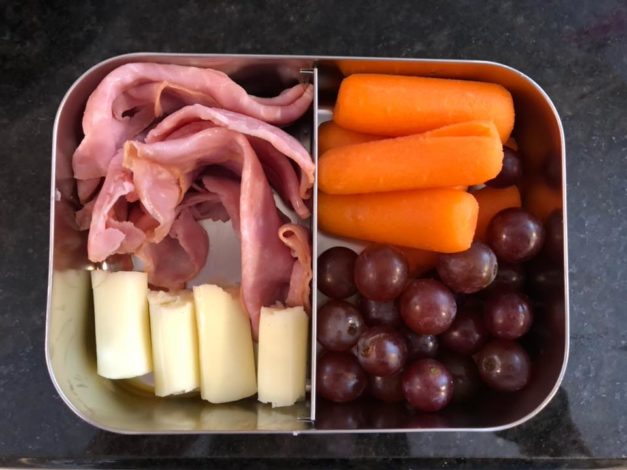
 How to pack snacks and food on road trips by Vong Hamilton for Hike it Baby

Read more:

Photos by Vong Hamilton and Jordan Else.

Community tags

This content has 0 tags that match your profile.

Stages of Childhood

Young Explorers (Walker +)

Let's Talk Gear & Snacks

Comments

To view comments or leave a comment, login or sign up.

Related Content

0
Exploring Nature with Your Senses: Touch
Updated for 2025: Spring Sensory Celebration As we step into a new season, we’re refreshing this post with new insights and activities for our Spring Sensory Celebration! This annual initiative encourages families to slow down and experience nature with all five senses. Whether you’re a longtime follower of OutGrown or discovering us for the first time, we hope these ideas inspire fresh ways to explore the outdoors with your little ones. While wandering through nature, we take in our surroundings using our senses. We smell flowers, touch tree bark, listen to bird calls, see details (like an ant trail on a tree), and even taste some of the natural objects we come across (think berries or edible flowers). And, while investigating nature in this way comes naturally to most children, sometimes we forget to allow children the time and space they need to do it. As part of OutGrown’s Spring Sensory Celebration, we’re sharing simple, engaging ways to activate each of the five senses outdoors with young children. Photo Credit: Michelle Pearl Gee Exploring Nature by Touch Touch is one of our most immediate ways of experiencing the world. Every moment outside offers a chance to notice new textures and sensations, from the sun's warmth to the rough bark of a tree under our fingertips. Though we take almost all of our touch sensations for granted and do not think much about them, one minute outside can feel like this: You touch the doorknob to let yourself outside and immediately feel the warm air and a slight breeze on your skin. You step outside, and your bare feet feel the warm cement ground. You walk toward your front yard and brush your arm up against a bush. You touch some flowers right before your feet touch the cooler grass. You take a moment to relish the feeling of the grass before you sit down and feel the soft ground under your body and maybe a slight itchy feeling on your legs. We often take these sensations for granted, but when we slow down and focus, we can turn everyday outdoor moments into a mindful, sensory-rich experience. But, if we slow down outside, practice a little mindfulness, and think about each feeling as it touches our body, it can shift any outdoor experiences greatly. Five ways to slow down and experience the sense of touch in nature: Create a touch box. A touch box is a fun, hands-on guessing game that helps kids explore nature through feel alone. Gather natural objects, such as pinecones, feathers, and smooth stones, place them in a box, and have kids guess each item by touch. You gather some simple natural items and put them inside a box. Don’t let your children see what is in the box and have them guess what nature item it is based on touch alone. You can put one item in at a time (good for younger children) or all at once to make it more challenging. Walk barefoot in nature. Our feet are packed with nerve endings, making them perfect for sensory exploration. Walk barefoot on grass, sand, or dirt, noticing how each surface feels differently. When you intentionally think about each sensation your feet feel, the whole experience of walking barefoot shifts just a bit. Find different textures in nature. Try a texture scavenger hunt! Challenge kids to find something rough, smooth, soft, bumpy, cool, or warm. You can also just have the ideas in your head and have the kids search for one at a time while you meander your favorite trail. Some examples of easy-to-find nature textures are rough, smooth, cold, warm, wet, dry, hard, soft, etc. Hug a tree. Tree-hugging isn’t just for fun; it’s a great way to explore texture and size. Notice whether the bark is rough or smooth, warm or cool, thick or thin.. Are you able to wrap your hands all the way around? Is the bark rough or smooth? Count the skin sensations. Pause for a minute and count all the sensations on your skin, the breeze, the sun, and the feeling of the ground beneath you. You’ll be amazed at how much you notice when you focus! The wind on your skin, the sun's warmth, the feeling of the ground under your body, the fly that landed on your leg, and so much more. It is hard to focus on only the sense of touch, but how many different things our skin can feel in just one minute is fantastic. Ready to explore more? Join our Spring Sensory Celebration! Share your sensory nature experiences with us using #SpringSensory, and check out our other posts on hearing, taste, smell, and sight for more ways to engage with nature.   About OutGrown OutGrown is a national nonprofit working to ensure that every family, especially those with babies and young children, can experience the benefits of time outside. Since our grassroots beginning in 2013, we have supported more than 300,000 families with the help of thousands of volunteers across the country. We believe nature belongs to all of us from the very beginning. That means creating opportunities, removing barriers, and supporting families in finding their way outdoors, whether that starts with a stroller walk, a community outing, or a quiet moment under the sky. You can learn more and explore our programs at WeAreOutGrown.org. Editor’s Note Thank you for reading. At OutGrown, we believe content should offer more than information. It should create a connection, support real-life caregiving, and reflect how families grow together through nature. Everything we share is made with care by our team and volunteer community. If this piece inspired you or helped you feel more confident in your outdoor journey, we invite you to support our work by donating today. Your contributions help us keep resources free and accessible to all families. Please remember that the experiences and tips shared in this article are for general information only. They are not a substitute for professional medical, mental health, or safety advice. Always consult with a qualified provider if you have specific concerns or questions. We are glad you are here. We are growing something meaningful together.